Knesset Vote: Israel's Divided Electorate Faces Uncertain Government
Polls indicate a deadlock in the 120-seat parliament, leaving the nation to decide between a stalemate, a minority cabinet, or a fifth election in four years.
By Elise Bennett ·
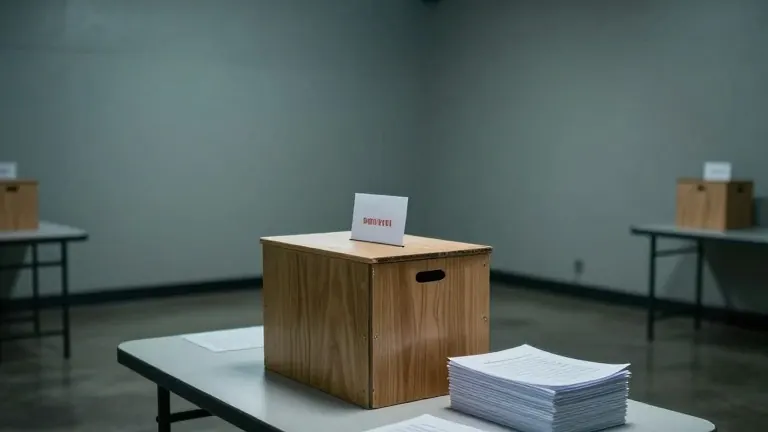
Israeli voters will head to the polls Tuesday in an election where neither the incumbent right-wing bloc nor the opposition "change" coalition appears likely to secure the 61 seats required for a majority. The vote comes three years after the October 7, 2023, Hamas attacks, which authorities have acknowledged as the deadliest incident in the country since its founding in 1948. With wars ongoing in Gaza, Lebanon, and Syria, and direct conflict with Iran still fresh in memory, the electorate is choosing a government under conditions of active military engagement.
Prime Minister Benjamin Netanyahu, seeking a fourth term, is leading the right and religious parties. His campaign rests on two main arguments: that only he can form a government without relying on Arab parties, and that he needs time to complete military operations in Gaza and against Iran. President Donald Trump endorsed Netanyahu last week, warning that if Israel has a different leader, "America will have to do this work ourselves." Netanyahu has capitalized on this support, using the slogan "Either right wing or Palestine, either right wing or a nuclear bomb" to frame the stakes. Over the weekend, he shared an AI-generated image of a mushroom cloud over Tel Aviv to underscore the perceived existential threat from Iran.
Opposing Netanyahu is a diverse "change bloc" comprising Arab, left, center, and right parties united by the goal of removing him from power. Gadi Eisenkot, the former military chief who leads the centrist Yashar party, is the front-runner to lead this coalition. Eisenkot lost his son and two nephews in Gaza and served in the war cabinet during the first year of the conflict. He has criticized Netanyahu for relying on "fear-mongering, lies, and threats" and promises to launch a state inquiry into the intelligence failures that allowed the October 7 attack. Approximately half of Yashar's candidates are women, a stark contrast to the male-dominated Likud coalition.
Voter turnout and specific demographic blocs will likely determine the final outcome. Arab Israelis, who make up about 20% of the population, are expected to vote in high numbers to block Netanyahu from forming a government with far-right allies. Jehad Abomoch, a cafe owner in Baqa al Gharbiya, described the last four years as a "real catastrophe" and said many in his community feel they have "no hope, no future" under the current leadership. Two new parties focused on mandatory military service for ultra-Orthodox men are also hovering near the threshold for Knesset entry, potentially tipping the balance in either direction.
If neither side wins a clear majority, Israel faces a complex path forward. Parties may switch sides to form a coalition, a common occurrence in Israeli politics. Alternatively, the change bloc could attempt to form a minority government by winning more seats than the opposition, even if they do not reach 50% of the total. If negotiations fail, the country will hold new elections. Israel held five elections between 2019 and 2022 due to similar deadlocks. Yohanan Plesner, president of the Israel Democracy Institute, noted that an indecisive outcome is the most likely result, though most politicians prefer to avoid another round of voting.
Source: CBS News