Utah data centers to build own power sources
New legislation allows major facilities to bypass utility grids, raising questions about local energy costs and resource strain.
By Riya Desai ·
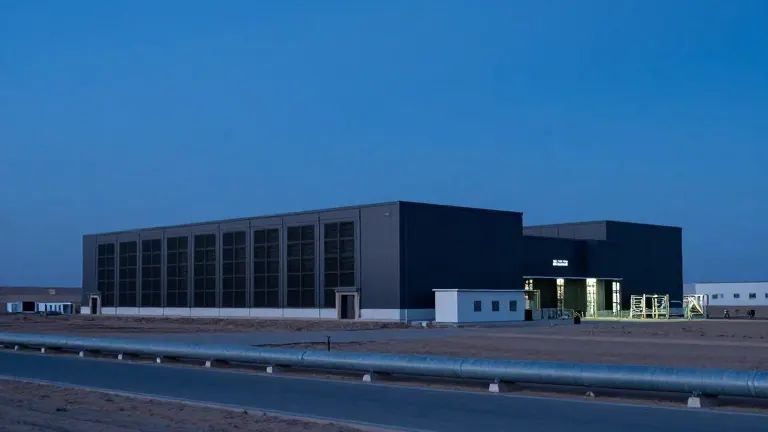
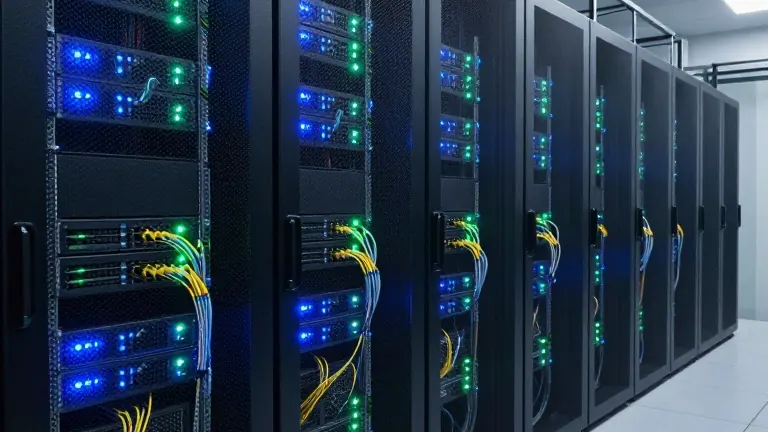
Two planned data centers in Utah will consume more than four times the energy currently used by the entire state.
The state currently uses approximately four gigawatts of energy annually. One facility in Millard County is targeting a capacity of more than 10 megawatts. A second facility in Box Elder County is targeting nine megawatts. Shon Hiatt, a professor at the University of Southern California, noted that Utah does not currently have enough power to supply these large loads at scale.
Many developers are now generating their own electricity to meet these demands. This approach, often called behind the meter energy, follows a law passed by the Utah Legislature last year. The statute created a new process allowing large customers to build their own power sources if utilities cannot supply enough. Hiatt’s research for the Kem C. Gardner Policy Institute indicates that seven data centers under construction will use nearly three times the energy of all existing state facilities combined. More than half of that new energy will be generated on-site.
Specific projects illustrate this shift. Kevin O’Leary’s Stratos project in Box Elder County will tap the Ruby Pipeline near the Great Salt Lake for natural gas. Creekstone Energy is building a facility in Delta that will tap the Kern River Gas Pipeline and also generate its own solar power. These moves align with national trends. President Donald Trump asked hyperscale data centers in March to build, bring, or buy their energy and pay the full cost of infrastructure. Abe Silverman, a research scholar at Johns Hopkins University, said there is bipartisan agreement that data centers should pay their own way.
Regulators say these measures protect average consumers. Michele Beck, director of the Utah Office of Consumer Services, stated that the law helps keep cost shifts away from regular customers. She noted that the state has not yet seen electricity rate increases from data centers. However, the situation is more complex regarding natural gas. Beck explained that current protections do not extend to natural gas prices, which are subject to federal regulation and market forces. She warned that supply constriction could lead to higher costs for all residents.
Residents have observed the impact of data centers in other states. Olivia Douglas moved back to Bountiful from Prince William County, Virginia, an area known for high data center density. She estimated that energy prices in her former neighborhood rose 30% over five years. Her neighbors have reported monthly bill increases of $100 to $200 in recent months. Prince William County is home to at least 41 data centers, with 70 more planned. Utah currently has 48 operational data centers. Douglas expressed skepticism that Utah can mitigate the environmental and cost impacts without learning from these experiences. She questioned who will pay for the necessary water and energy resources as the industry expands.
Experts agree the long-term effects on utility rates are not yet fully clear. Silverman described the impact as geographically specific. A Bloomberg analysis found electricity rates spiked as much as 267% per month in areas near significant data center activity. Industry groups attribute some of these increases to inflation and grid modernization. Hiatt found minimal impacts on U.S. energy prices between 2019 and 2025 but said the state is at risk moving forward. Beck believes Utah is positioned well to protect consumers, though she acknowledged that regulators must keep pace with technological change. She said elected officials must find creative solutions where regulatory tools are lacking.
Source: KSTU · original report published
More Business · Salt Lake City news · Watch Your Wallet · Report a business